
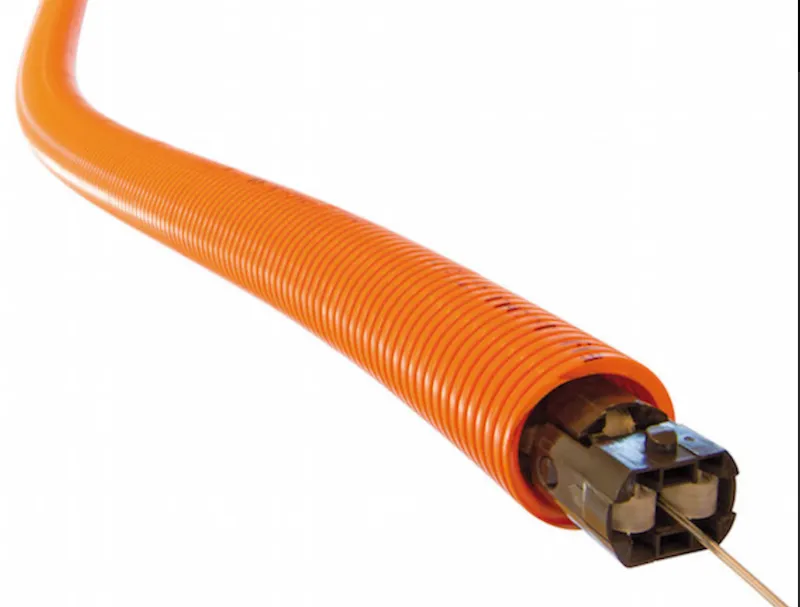
Roll-Guided Wire Feed System
Rolliner routes welding wire on rolling contact (0.08 friction coefficient) rather than dragging it through a plastic liner. The wire that jams at 15 meters on a conventional liner runs clean at 25.
Made in Germany by MIGAL.CO GmbH · US distribution by Inmotion, Jacksonville FL
Conventional PTFE and plastic liners work on short, straight runs. Route them through an energy chain, stretch the distance past 6 meters, or feed aluminum wire, and friction accumulates until the feeder can't push.
Friction spikes at every bend. The more the arm moves, the worse it gets.
Friction accumulates linearly. At 15–25 m, a conventional liner works the feeder motor to failure.
Soft wire shaves against liner walls. Debris accumulates. The jam you notice is the one that built up over weeks.
Two or three shifts per day means wire feed failures compound. Every 15-minute repair cycle has a dollar value.
Individual roller pairs rotated 90° to each other. The wire always contacts a roller, never a liner wall. Per MIGAL.CO testing.
Friction stays constant across the full length, so a 25-meter run feeds as reliably as a 3-meter one. Extendable with hose connectors.
Patented conical guide threads wire through tight bends without the resistance buildup that collapses push force in a liner.
Rolling contact doesn't abrade wire surfaces. Aluminum wire runs without shaving, debris accumulation, or bird-nesting.
The roller elements don't wear the way liner material does. No replacement cycle, no lubricant schedule.
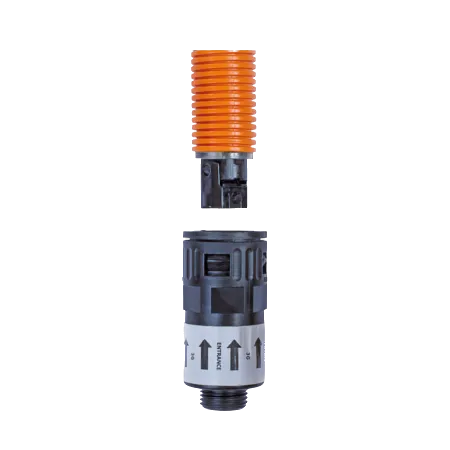
Snap elements together to length. Extend later if the cell layout changes. Shorten with a separation tool.
Supports TIP-TIG and high-deposition processes. Wire delivery stays consistent at speed because friction doesn't compound with distance.
Shields the roller elements from weld spatter, grinding dust, and coolant. Run without it in clean cells to save weight.
| Dimension | Rolliner 3G | Conventional liner |
|---|---|---|
| Friction coefficient | 0.08, consistent across the full run length | 0.15–0.35 (increases with wear and number of bends) |
| Wire transport principle | Rolling: precision roller pairs, wire rides on rollers | Sliding: wire drags against liner wall |
| Maintenance | Maintenance-free for several years | Regular liner replacement as it wears (typically every 3–6 months on busy cells) |
| Aluminum wire handling | Clean transport, no surface abrasion | Shaving, bird-nesting, compression issues |
| Energy chain performance | Designed for it: 70 mm radius, consistent rolling contact through dynamic paths | Degrades with repeated flexing and multiple bends |
| Maximum reliable length | 25 m (extendable) | Degrades significantly past 5–6 m |
| Assembly | Tool-free, snap-together elements | Cut-to-length, crimped fittings |
| Wire debris build-up | None: rollers don't abrade wire | Accumulates shavings that cause progressive jams |
Friction coefficient
Rolliner 3G
0.08, consistent across the full run length
Conventional liner
0.15–0.35 (increases with wear and number of bends)
Wire transport principle
Rolliner 3G
Rolling: precision roller pairs, wire rides on rollers
Conventional liner
Sliding: wire drags against liner wall
Maintenance
Rolliner 3G
Maintenance-free for several years
Conventional liner
Regular liner replacement as it wears (typically every 3–6 months on busy cells)
Aluminum wire handling
Rolliner 3G
Clean transport, no surface abrasion
Conventional liner
Shaving, bird-nesting, compression issues
Energy chain performance
Rolliner 3G
Designed for it: 70 mm radius, consistent rolling contact through dynamic paths
Conventional liner
Degrades with repeated flexing and multiple bends
Maximum reliable length
Rolliner 3G
25 m (extendable)
Conventional liner
Degrades significantly past 5–6 m
Assembly
Rolliner 3G
Tool-free, snap-together elements
Conventional liner
Cut-to-length, crimped fittings
Wire debris build-up
Rolliner 3G
None: rollers don't abrade wire
Conventional liner
Accumulates shavings that cause progressive jams
| Friction coefficient | 0.08 (per MIGAL.CO testing) |
|---|---|
| Maximum wire diameter | 1.6 mm (0.062″) |
| Maximum conduit length | 25 m (extendable with hose connectors) |
| Minimum bending radius | 70 mm |
| Maximum wire feed speed | 30 m/min |
| Compatible wire materials | Steel, stainless steel, aluminum, copper, bronze (all round wire types) |
| Maintenance | Maintenance-free for several years |
| Manufactured by | MIGAL.CO GmbH, Germany |
| US distribution | Inmotion, Jacksonville FL |
Rolliner is made in Germany by MIGAL.CO GmbH and distributed in the US by Inmotion.
Rolling friction is 0.08, Sliding friction in a PTFE liner runs 0.15–0.35 and climbs as the liner wears. That gap is why a 25-meter Rolliner run stays consistent while a liner on the same path fails.
One repair weld covers the price delta, A wire jam mid-bead means arc extinction, grinding, a repair weld, and restart. On a production line, a single cycle like that costs more than the difference between a liner and a Rolliner.
The liner budget is recurring. Rolliner's isn't., On a busy cell, liner replacement goes in the maintenance budget every 3–6 months. Over two years, that total reliably exceeds the Rolliner cost.
Made in Germany by MIGAL.CO GmbH, Engineered and manufactured in Germany. Purpose-built for robotic wire feed, not adapted commodity hardware.
US distribution and support from Inmotion, Sold, stocked, and supported in the US. Quotes, delivery, and after-sale help without overseas lead times.
Up to 1.6 mm (0.062″). That covers the standard range for MIG/MAG robotic welding. For thicker wire up to 4.0 mm, the Rolliner XL2 is the right variant.
25 meters for a single section. Hose connectors let you join sections for longer runs. For very long runs, a MIGAL.CO RoboFeed assist system can be added mid-line.
Yes, and this is one of its strongest applications. Aluminum wire is soft enough that conventional liners shave material off the surface. Rolliner's rolling contact doesn't abrade the wire, so there's no shaving, no debris build-up, and no progressive friction increase.
Under normal operating conditions, it doesn't. The roller elements don't wear the way liner material does. Maintenance-free for several years.
Yes. Snap additional elements on to extend. Use a separation tool to shorten. No crimping or special fittings required.
70 mm. Tight enough for standard energy chains and robot arm joints without degrading wire feed.
Yes. The Rolliner XL2 handles wire up to 4.0 mm and is designed for high-deposition and submerged arc applications. The Rolliner NG is a lighter, flexible variant for weight-sensitive arm-mounted routing.
Inmotion, Jacksonville FL. US sales and support directly.
Tell us about your application and we'll send a configured quote. Pricing depends on run length and configuration.
Wire feed reliability becomes a fixed property. Rolling contact at 0.08 friction coefficient stays consistent over the life of the conduit. Install it once.
Works across aluminum, steel, stainless, copper, and bronze. One conduit system handles your full wire range.
Designed for energy chain routing. 70 mm minimum bending radius, consistent performance through dynamic paths that wear conventional liners out fast.
Tool-free. Adjustable after install. Snap together, extend if the cell layout changes, shorten with a separation tool.
Made in Germany by MIGAL.CO GmbH. Supported in the US by Inmotion. Stock in the US, quotes and delivery without overseas lead times.
A US-based specialist will get back to you within 24 hours.
Thanks, we've got it.
A US-based specialist will be in touch within 24 hours.
Prefer to talk now? → +1 312 547 9253 · office@inmotion.global